One of my pet areas of interest is colour reproduction. Film has always had its issues, and Digital has its issues as well. Digital seems at times, to have bigger issues. Any three colour system of reproduction will have problems reproducing real world colours that don’t match the primaries of the system. The further away the real colour is from a primary the worse the results. The reproduced colour will become undersaturated as a mix of colours tries to represent, potentially a single colour of light. When a colour nears a reproduction primary the saturation may become over saturated as the other primaries fall away in brightness. Giving only a near single colour when viewed. We see it all the time when we watch television. The Reds are to Orange, the Greens to Yellow. We usually just adapt, but once in awhile the observant will notice that a Fire Truck is the wrong shade of Red, to Orange. Colours will be reproduced as shades of the primaries in use. These Winter scenes demonstrates the effect of limited available colours and proximity to the system primary. I suspect the images also indicate the Blue channel has some sensitivity to Ultraviolet. 
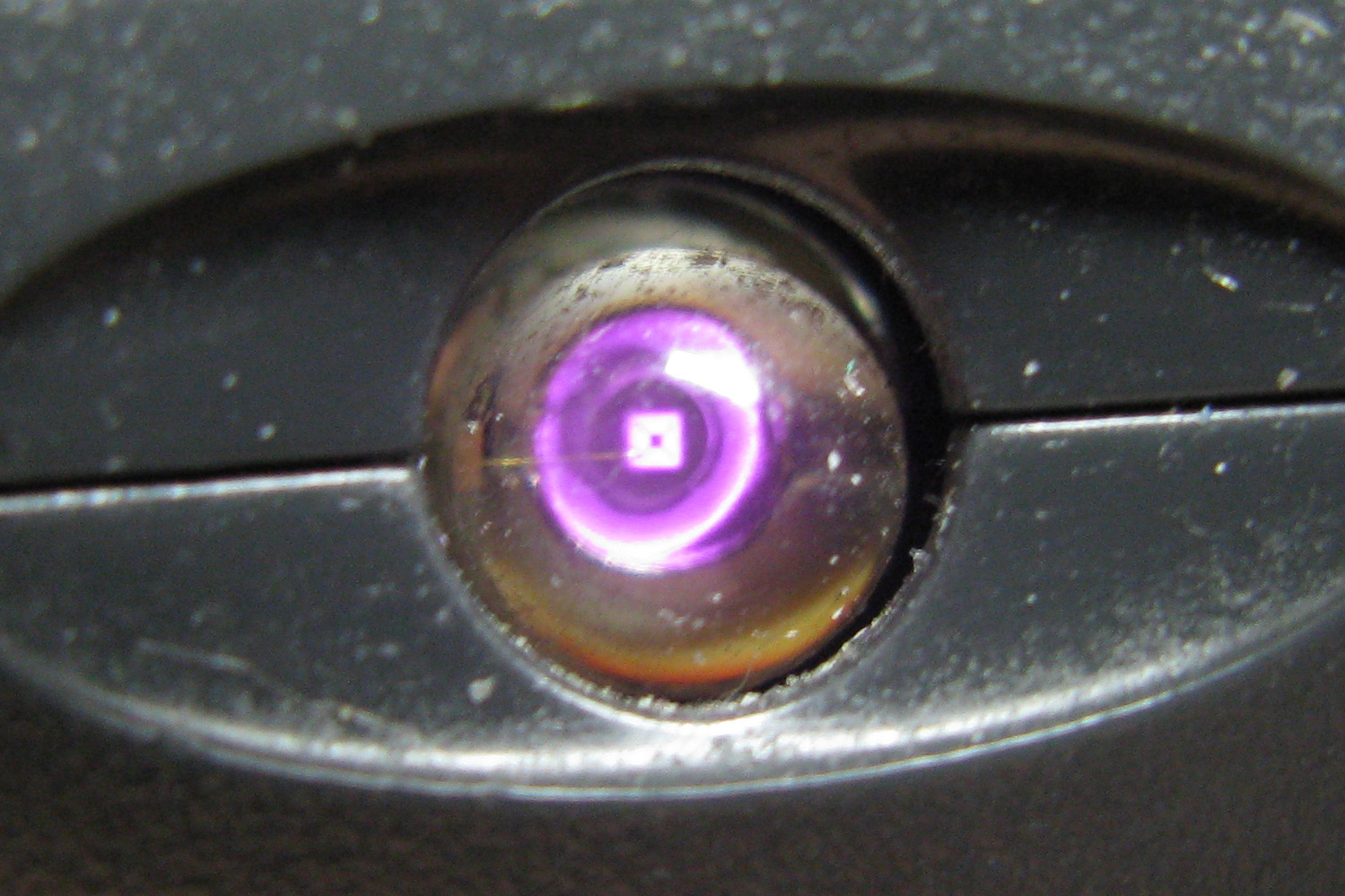
 Digital has a further issue. The sensor is very sensitive to Infrared light. A simple demonstration, an active TV remote pointed at the camera. Normal it isn’t visible to human vision, but to a digital camera even the pulses of the command are visible. The LED not appearing as pure Red is an indication that the built in filter colours for the senor also have some leakage in the Infrared. The coloured glow from this Infrared LED measures with a large amount of Blue, and Red, with a small amount of Green. This skewed sensitivity might well affect reproduction of foliage as plants are famous for reflecting Infrared light. This same effect, however is convenient if you wish to do Infrared Photography. A special version of a Canon 5D is available without the Infrared filter installed, used mostly for astronomy. Some people even purposely remove the filter for the effect.
The Macbeth, or GretagMacbeth colour checker, now a product owned by Xrite, has for years been used as a standard for reproduction. Simply, a large card with colour swatches painted on that are chosen to represent real world colours. The actual values are precisely controlled, so that everyone has the same reference. Below are four versions of the card, a computer rendering, a scan of an Ektachrome slide, and two digital shots of the card. The same one in this case. Why use a standard? Very simple, if I send a picture of a painting via email and the image contains the Macbeth chart, then who ever receives it will know how the reproduction of the painting has been affected. At its simplest a visual check, but readings of the colours can also be used to correct the image for more faithful reproduction.
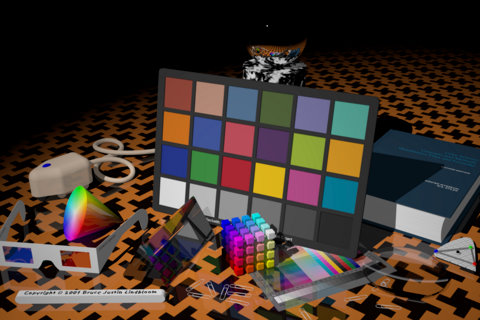
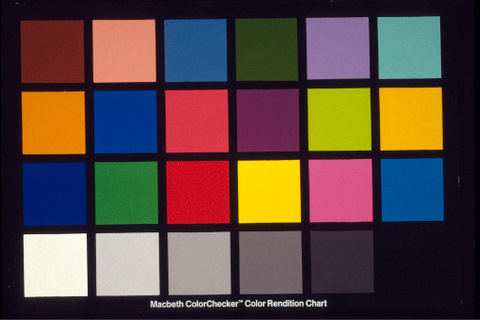
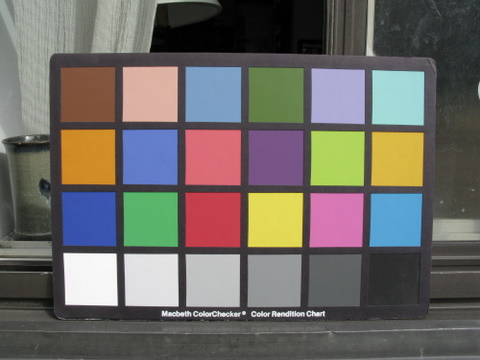
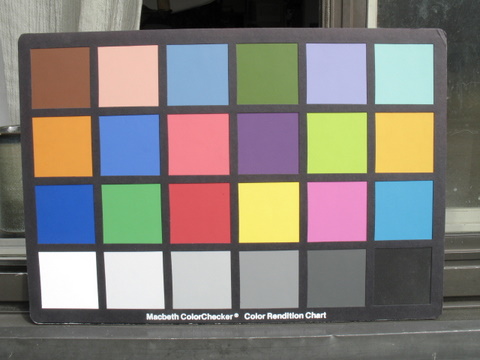
As you can see these images each while similar also have their differences. In this case film has a double whammy. There is the film’s reproduction faults and then its been scan by a digital film scanner, which is really just another digital camera. While the digital scanner will be more tightly controlled, its still another colour process. Another issue to consider is that we are viewing these images on monitors, CRT or LCD, which also have their own problems with colour reproduction, but that’s another topic.
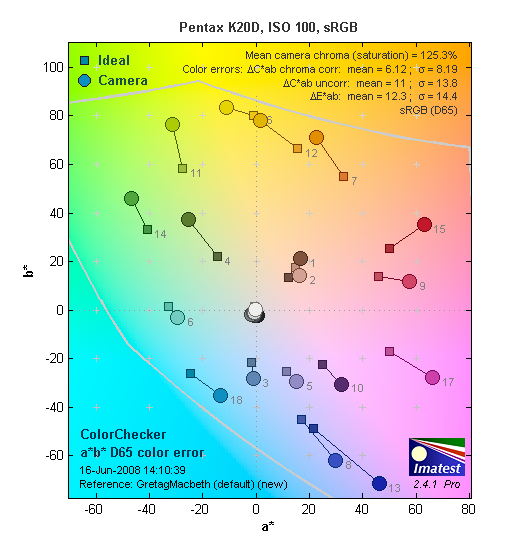
The IMAtest. This is a very nice piece of software that compares the know values of the Macbeth chart, and the information in a digital image file containing the same chart. The comparison is presented as a colourful graph showing pictorially the deviation from ideal reproduction, percentage errors are also included. Many online camera review websites provide these results and other highly technical information for the camera being reviewed. Doing a Google for IMAtest and your own model of camera should produce one or more reviews with this comparison graph. Many sites will also include sample images and results from their own criteria. I find that looking at their own tests less useful as I don’t know what their sample actually looks like.
I’ve included several samples of cameras of interest below. The Canon A650 IS, and the Canon A620 are the two digital cameras I use. Also the Pentax K20D, which I contemplated purchasing, but didn’t for other reasons. The Canon 5D, which is a, wouldn’t it be nice to have, and a Canon 1000D or Canon Rebel XS. The Canon 1000D is their entry level DLSR. As a balance I’ve include one of the recent Nikon D5000 digital camera. These images are from www.imaging-resource.com, www.digitalcamerainfo.com, www.photoreview.com.au. I find these sites useful and informative, but don’t endorse them.
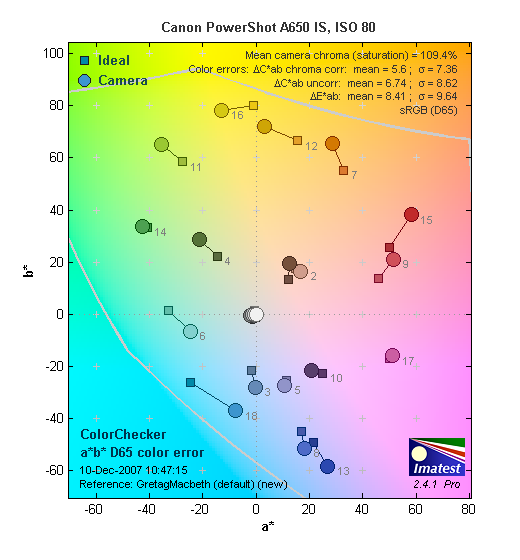
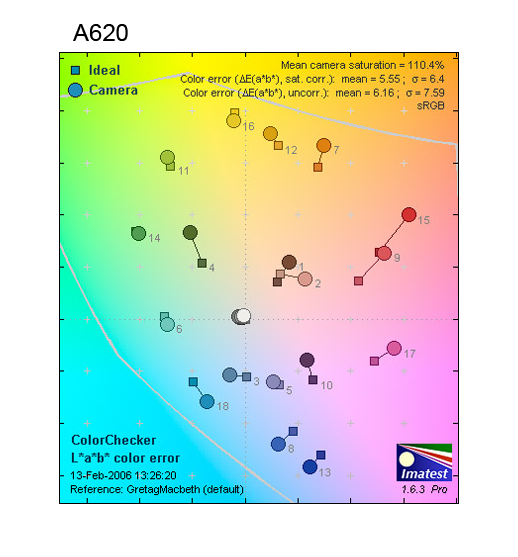
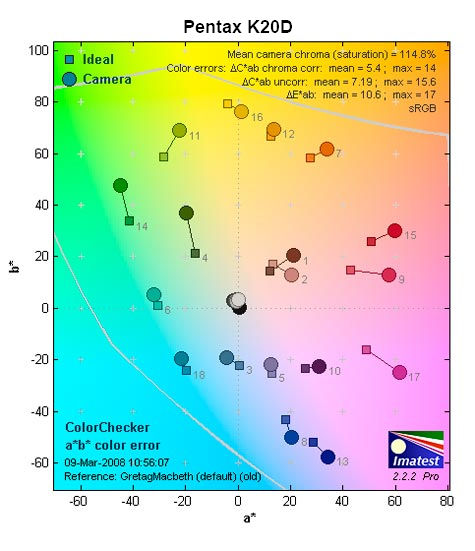
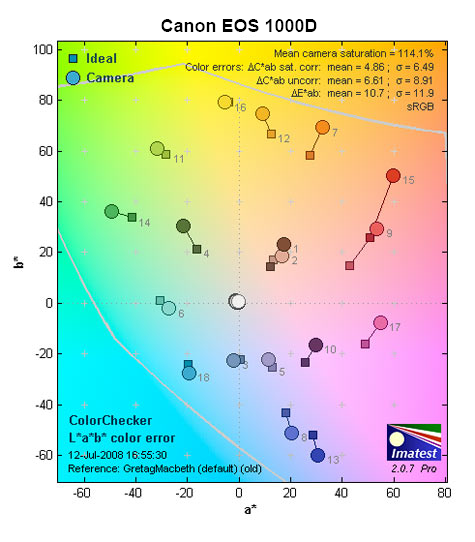
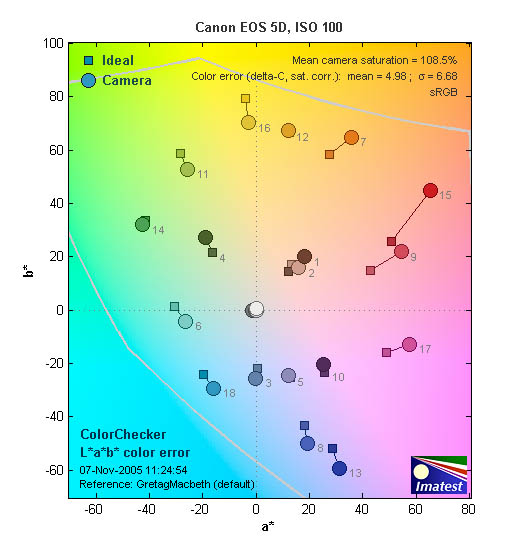
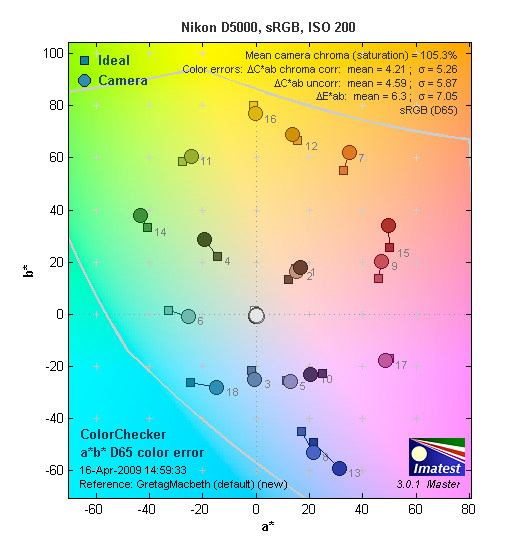
So what do all these pretty graphs mean? Well firstly the background colour of each graph is only an indication of the tonal range and not the actual colour. The gray line tracing a rough box represents the colour reproduction of a typical monitor or sRGB colour space. The little coloured squares represent where the colour swatches of the Macbeth chart should be reproduced inside the colour space. The larger coloured circles represent the actual colour produced by the camera being tested. Ideally the circles should be on top of the squares, but as you can see the majority aren’t. To get a sense of what is going on, consider that the centre of the graph is no colour or, no saturation or, gray scale. As you move out from the centre the colour intensity or saturation of a particular colour increases. Eventually becoming a pure or monocromatic colour. Most of these graphs share a common colour issue the red squares are reproduced as to pure or saturated a colour. If the colour being reproduced isn’t straight out in direction from the centre another problem is present. This is colour shifting. The circle is now representing a different colour than the original square. On some graphs the Reds are grossly more saturated, while only slightly a different shade of Red. As you look at each graph look at the shifting and saturation changes of each colour. Some cameras are better than others, and price isn’t necessarily an indication of quality. Compare Nikon D5000 with the Canon 5D, which is almost twice the price.
All of these tests can of course be skewed if they not tested under the same camera operating conditions and settings. Course some camera won’t have comparable settings. I include the last two images to demonstrate this. These are both from a Pentax K20D, but different websites. Obviously something is amiss.