Well that title sounds a little grand, and misleading as well. I’ve never really stopped shooting B&W film, I just got to the point that I rarely shot more than a couple of rolls a year.
B&W shooting of film or digital requires a perceptual jump when visualizing how a shot will come out. Digital has the advantage of the LCD on the back of the camera, but if you intend to go beyond factory presets it isn’t much help either. You’ll still have to wait until your digital image is reprocessed in Photoshop before you can see the finished image. In either case you have to learn how to look at the scene, and mentally digest its content. Will that tree limb be lighter or darker than the sky when neither has any colour? Very tricky. I became fairly haphazard in my shooting with the less that I shot in B&W. Particularly when I was shooting a lot of colour film. I could previsualize images in terms of contrasting colours, and of course light and dark. I’d have a pretty good idea of what the final image would look like after tone range compression, shadows blocking up, and high lights burning out. So unlike in colour, the important thing is, is that red object, and that blue object going to be the same shade of gray on B&W film. Many of my B&W Landscape shots while interesting weren’t very good because everything ended up being a similar shade of gray.
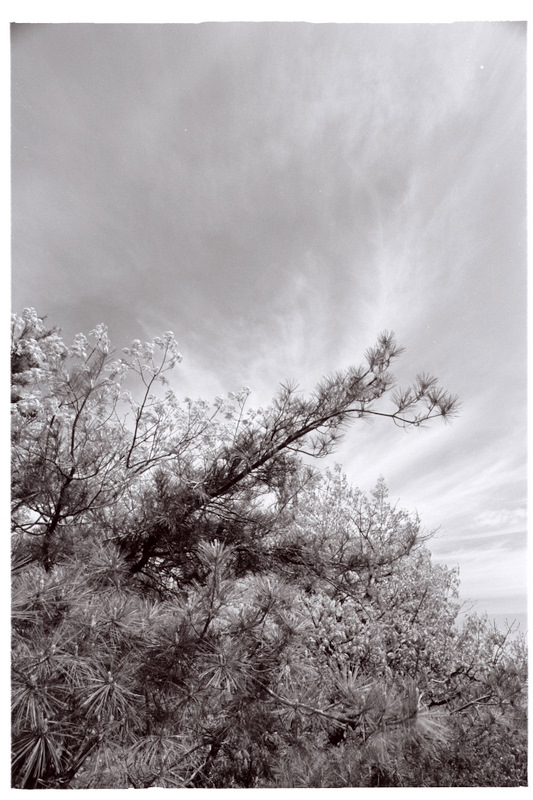
This image works well because the tree limb is contrasted against the white in the sky. The limb and the sky complement each other in many ways.
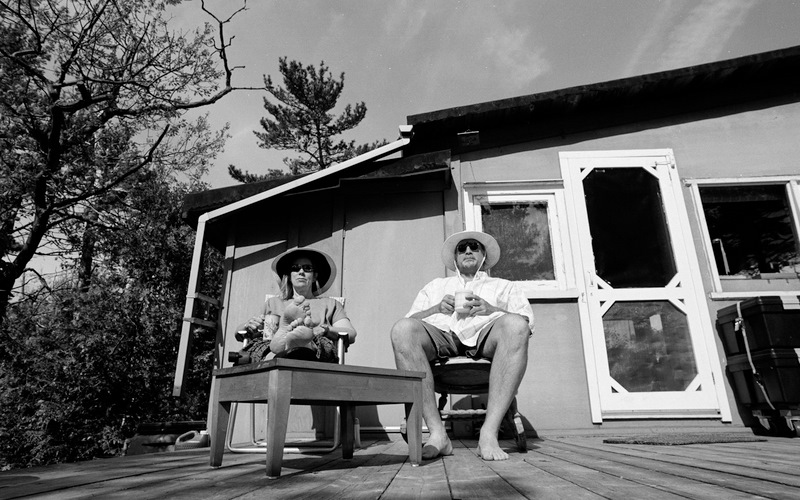
In this image lots of high-lights and shadows give the eye something to work with. All we need is to be holding a pitch-fork at the lowly old homestead.